
Scam Guides AI Scams
Deepfake video-call scams
A video call where the faces of people you know, or of officials, are faked.
How it works
An employee of the engineering firm Arup in Hong Kong joined a video meeting where the finance chief and colleagues were all deepfakes, and made 15 transfers worth about US$25.6 million [1].
A Bengaluru chartered accountant was reported to have lost ₹23 lakh to a deepfake video scam [2]. WhatsApp accounts have also been used to pose as officials, as in digital arrest cases [3].
Warning signs
- A video call from someone you know that asks for money or secrecy.
- Pressure to act during the call.
- A face that is right but a story that does not fit.
What to do
- End the call and contact the person on a number you already have.
- Ask another trusted person to confirm.
- Do not send money or share codes during a call.
- Tell the family.
How Scam Rakshak helps
Scam Rakshak watches WhatsApp activity for the patterns scammers use. It does not read messages or listen to calls. Once protection is turned on, it works quietly in the background and alerts you only when it detects signs of a potential scam.
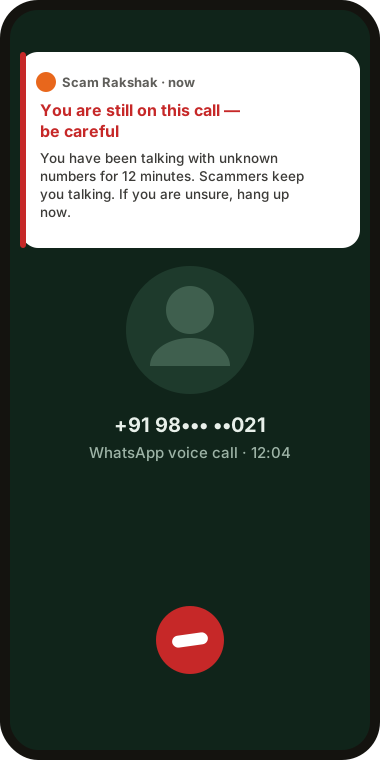
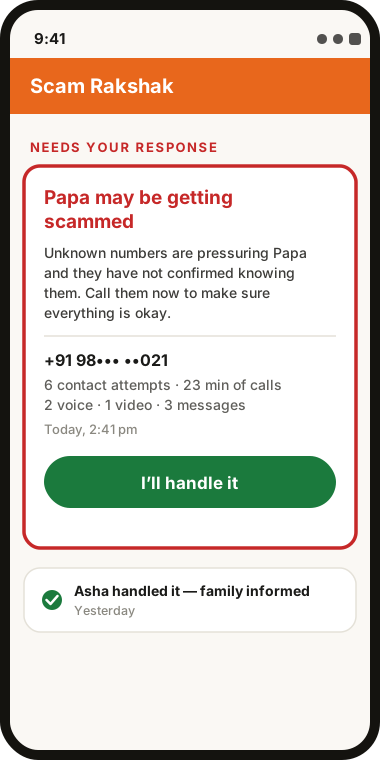
Protection for seniors is free. Scam Rakshak cannot stop every scam, so the steps above still matter.
Get it on Google Play See how it works
Sources
Cases are as reported by the outlets linked above. Amounts and details are theirs, not ours. Blu Codeworks is an independent Australian software studio. Scam Rakshak helps protect seniors by detecting signs of scams. It cannot stop every scam.