Scam Guides India
KYC update and "your account will be blocked"
A call or message in the name of your bank, wallet or telecom company says your KYC must be updated or your account will be blocked.
How it works
Fraudsters call or message pretending to be from a bank, e-wallet or telecom provider, say a KYC update is needed, and threaten to block the account or SIM. The Reserve Bank of India lists this among the common ways people are defrauded [1].
They also try to get login details, PINs and OTPs. The RBI's advice is never to share them with anyone, "not even with bank officials, however genuine they might sound" [1]. Links in these messages can lead to copies of real sites, so check web addresses for spelling errors [1].
Warning signs
- An unexpected call or message about KYC, or a threat to block an account or SIM.
- A link to click or an app to install.
- A request for a PIN, password or OTP.
What to do
- Do not respond to offers to get KYC updated or speeded up [1].
- Use the bank's official website or contact the branch directly [1].
- Never share a PIN, password or OTP with anyone.
- In India call 1930 to report it.
How Scam Rakshak helps
Scam Rakshak watches WhatsApp activity for the patterns scammers use. It does not read messages or listen to calls. Once protection is turned on, it works quietly in the background and alerts you only when it detects signs of a potential scam.
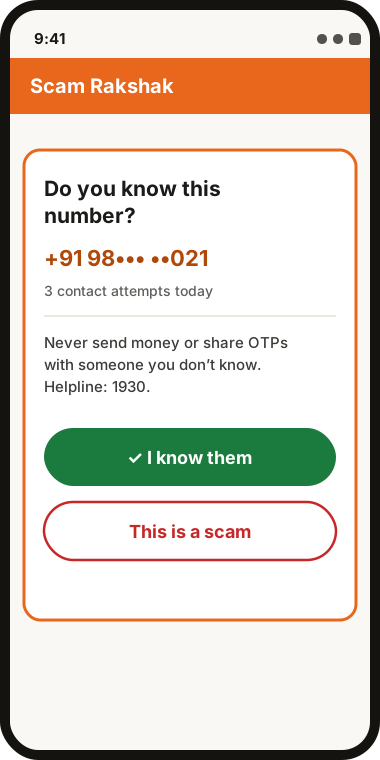
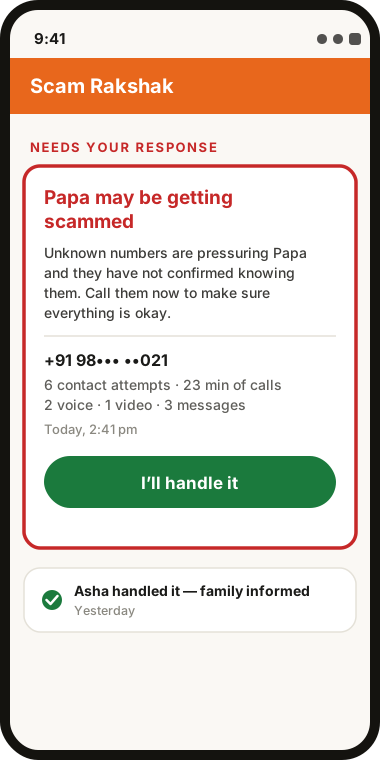
Protection for seniors is free. Scam Rakshak cannot stop every scam, so the steps above still matter.
Get it on Google Play See how it works
Sources
Cases are as reported by the outlets linked above. Amounts and details are theirs, not ours. Blu Codeworks is an independent Australian software studio. Scam Rakshak helps protect seniors by detecting signs of scams. It cannot stop every scam.