Scam Guides Brazil
Fake relative and cloned WhatsApp
A message from a "relative" or friend, from a fake or cloned profile, asking for money.
How it works
Criminals create a profile with the name and photo of a friend or relative, or clone their WhatsApp, and ask for money, for example to pay for a phone or car repair. Canaltech's advice is to check with another family member and to confirm the request directly with the person who supposedly made it [1].
Warning signs
- A message from a "new number" of someone you know.
- An urgent request for money.
- An excuse for not taking a call.
What to do
- Do not answer unexpected messages asking for money [1].
- Check with another family member whether the relative really changed number [1].
- Call the person on the number you already have.
- Talk to your bank and report it through SaferNet.
How Scam Rakshak helps
Scam Rakshak watches WhatsApp activity for the patterns scammers use. It does not read messages or listen to calls. Once protection is turned on, it works quietly in the background and alerts you only when it detects signs of a potential scam.
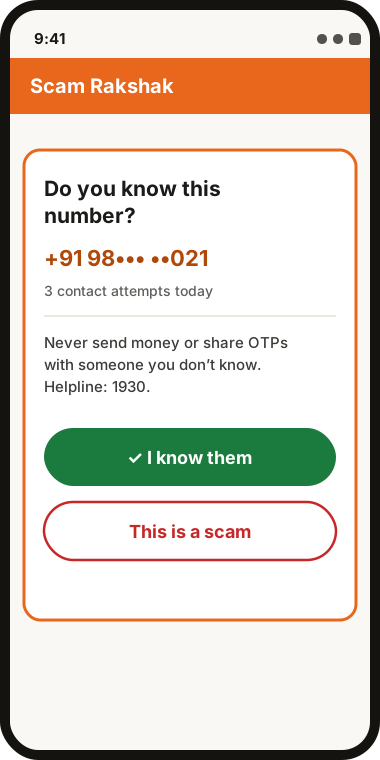
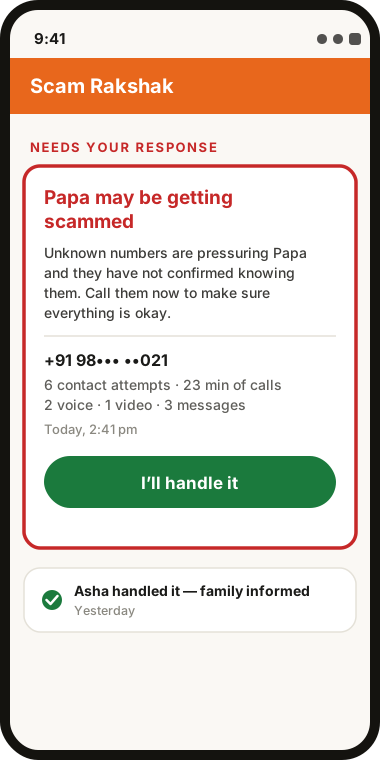
Protection for seniors is free. Scam Rakshak cannot stop every scam, so the steps above still matter.
Get it on Google Play See how it works
Sources
Cases are as reported by the outlets linked above. Amounts and details are theirs, not ours. Blu Codeworks is an independent Australian software studio. Scam Rakshak helps protect seniors by detecting signs of scams. It cannot stop every scam.